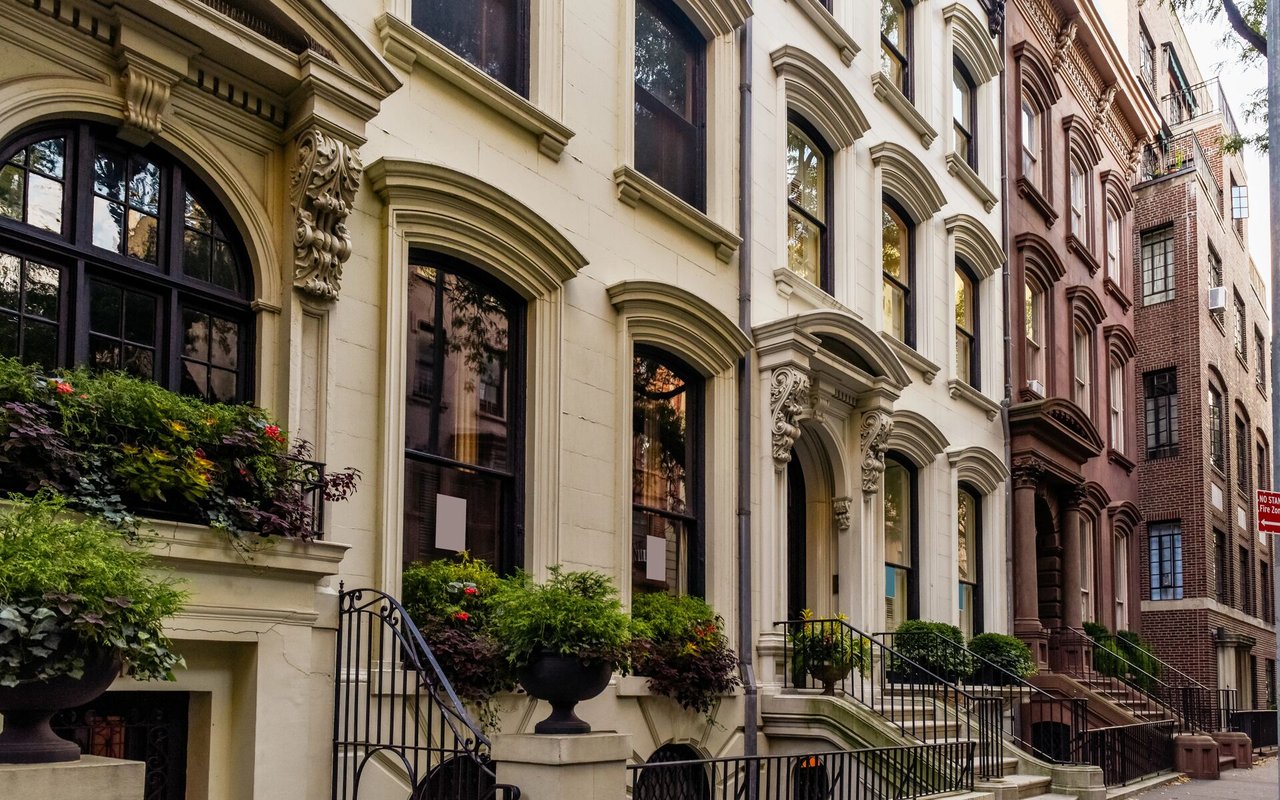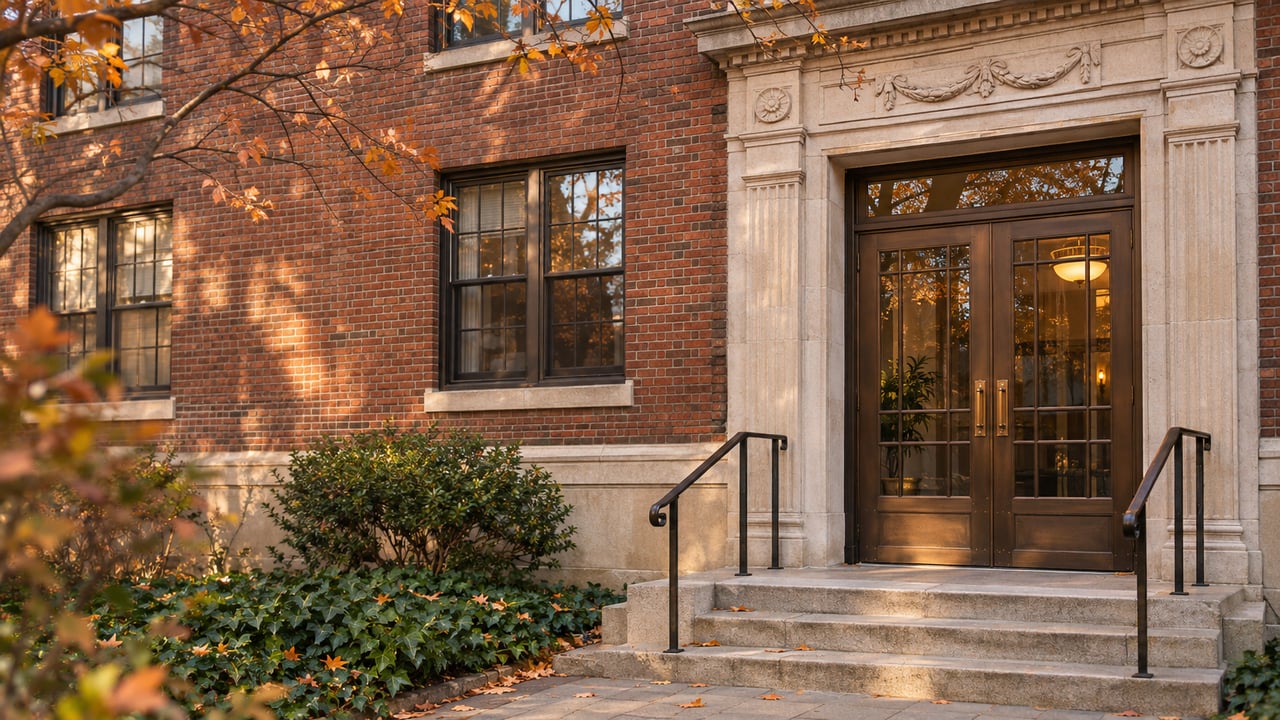
At 250 Cabrini Boulevard, a 77-unit co-op in Hudson Heights, the plan started as ordinary masonry work. Then the board looked into the leaks shareholders had been reporting for years. According to Habitat Magazine's account of the project, removing the parapets exposed corroded steel beams, which board president Caroline King told Habitat were "like Swiss cheese." The budget grew from $1.8 million to $3.5 million. To finish the job and rebuild reserves ahead of a planned $250,000 boiler conversion, the board levied an $850,000 assessment. A third of shareholders paid their share up front, and the rest is being collected over three years.
The co-ops in this post go back as far as 1924, when Hudson View Gardens was completed, and Castle Village and 720 Fort Washington Avenue date to the late 1930s. Over a buyer's years of ownership, the apartment you pick matters less than the building it sits in, and every one of these buildings has its own record of roofs, facades, boilers and assessments. The asking price tells you about the apartment. The building's record tells you what you will keep paying for it.
Two sales $9,000 apart
This fall, two Hudson Heights co-ops closed a month apart at almost the same price. Apartment B13 at Hudson View Gardens, 116 Pinehurst Avenue, sold on October 8, 2026 for $840,000, with monthly maintenance of $1,905. Apartment 4I at 371 Fort Washington Avenue sold on November 4, 2026 for $849,000, with monthly maintenance of $2,533.
The prices differ by $9,000. The maintenance differs by $628 a month, or $7,536 a year, so the higher monthly charge passes the entire price gap in about 14 months. The apartments and buildings are different, and two owners who paid nearly the same price are now on very different monthly budgets.
Within one complex, the pattern runs the other way. On November 13, 2026, a garden-level two-bedroom, one-bath apartment, H14, was listed at Hudson View Gardens for $595,000 with maintenance of $1,904 a month. That is $245,000 less than B13 sold for in October, with almost exactly the same monthly charge. At Hudson View Gardens, the maintenance stays nearly level across very different prices. The complex dates to 1924 and has 13 connected buildings, 353 apartments, gardens, a pool and tennis courts. Both Hudson View Gardens pages show a 25 percent down payment figure.
The wider numbers point the same way. Public sales data from PropertyShark put the Washington Heights co-op median at $580,000 for the third quarter of 2026, up 32.6 percent from a year earlier, at $731 per square foot across 51 sales. Washington Heights condos had a median of $633,000 in the same quarter, down 12.7 percent across 13 sales. Those figures cover all of Washington Heights, not just the streets west of Fort Washington Avenue. For Manhattan as a whole, Brick Underground reported a third-quarter 2026 median of $1.25 million for co-op and condo sales. With entry prices this far below the borough median, maintenance becomes a larger share of what a Hudson Heights owner pays each month, and that makes the building's condition count for even more.
A finished project changes the next buyer's position
Back at 250 Cabrini, the timing matters for anyone buying now. Habitat reported that the 14-month project was completed in August and left the building with new waterproofing, reinforced beams and lintels, repaired sills and masonry, new cast-stone details and new parapets. With engineers already on site, the board also completed the inspections for the next facade inspection cycle. A buyer there today is purchasing in a building that already found its worst problem and paid to fix it. Current shareholders are still paying that assessment over its three-year schedule, and how it is handled when an apartment sells is a question for the building's documents and your attorney.
Bennett Arms, an 84-unit Hudson Heights co-op, went through a similar sequence on a smaller scale. Habitat reported that the building finished a $1 million masonry and sill facade project, paid for with an assessment, and then spent $30,000 landscaping and refreshing its patio. The patio is the part you see on a showing. The facade work behind it explains why the patio could be the next project.
The Pinehurst at 447 Fort Washington Avenue posts its improvement history on its own building website, and the timeline shows what a long record looks like. The roof was replaced in 2005. The facade was repointed and more than 400 apartment windows were replaced in 2008. The boiler was upgraded to No. 2 oil in November 2012. Local Law 11 facade repairs ran from summer 2022 to spring 2023, and the hallway tile was replaced in winter 2025. A list like that lets a buyer see when the large items were last handled. That makes the next likely expense easier to place in time.
The choices a board makes show up in the monthly charge
Pinehurst House is a separate building from The Pinehurst, despite the similar name. It is a 38-unit co-op in three buildings at 7 Pinehurst Avenue, 5 Pinehurst Avenue and 752 West 178th Street. Habitat's September 2025 report describes the heating decision the board faced. A new oil boiler was priced at $160,000, gas at $200,000, and heat pumps at more than $250,000, and the board chose oil. To pay for it, the co-op took a $170,000 loan with a five-year term and 40-year amortization, raised maintenance, and added a five-year boiler assessment. Habitat reported that the combination raised monthly carrying costs by 10 percent.
For a buyer, three facts in that story are directly useful: the cost of the decision, how it was financed, and when the financing ends. A five-year loan term means the building will be back at the lender within five years. A five-year assessment has a set end date. All of it is information you can request and read before you make an offer, and it says more about the next few years in that building than the floor plan does.
At 250 Cabrini, the $850,000 assessment was sized partly to restore reserves ahead of a planned $250,000 change from an oil-fired boiler to gas. Two Hudson Heights buildings, both dealing with heating, made different decisions and paid for them in different ways. Each decision now shows up in what an owner in that building pays every month.
Castle Village and a building's long memory
Castle Village is the most widely known example of this in the neighborhood. Its five buildings went up in 1938 and 1939 on a bluff above the Hudson, with landscaped gardens, walking paths and terraced rooftops. On May 12, 2005, its retaining wall collapsed onto the Henry Hudson Parkway. Habitat reported in 2007 that $25 million was needed for repairs, including $11 million raised through shareholder assessments ranging from $11,000 to more than $40,000 per apartment, and that the wall repairs were complete by mid-October 2007.
The building rebuilt, and the wall is now two decades in the past. Its later history follows the pattern seen across the city. In a September 25, 2023 article, Habitat reported that the Castle Village board raised maintenance 19 percent early that year, had an ongoing assessment to rebuild reserves, and planned a four-year special assessment beginning the following January. Habitat also cited Miller Samuel data showing co-op operating costs up 53 percent from the start of 2020 to that point. Those numbers describe 2023, not today. Their value now is the questions they raise. When you look at a Castle Village apartment, or any apartment in these blocks, ask where the building stands in its current round of assessments, when that round ends, and what the board has planned next.
As a longtime Upper West Side co-op owner and former board president, I have been on the other side of these decisions. Boards in older buildings rarely face a choice between spending money and not spending it. They choose when to spend and how to spread the cost. A buyer who learns how a building has made those choices in the past is in a better position to understand what the monthly charge will look like years from now.
A few questions buyers ask
Is a recent assessment a reason to pass on a building? Not necessarily. At 250 Cabrini and Bennett Arms, the assessment paid for facade work that is now finished. Knowing what an assessment paid for, and when it ends, matters more than the fact that a building had one.
Where can I find a building's repair history? Some buildings publish it, as The Pinehurst does on its website. For others, the history is in the building's documents and board materials, which your agent and attorney can request during due diligence.
How do Hudson Heights prices compare with the rest of Manhattan? In the third quarter of 2026, the Washington Heights co-op median was $580,000. The Manhattan-wide median for co-op and condo sales was $1.25 million.
The prices, maintenance figures and assessments above come from published listings and reporting as of their stated dates. This post is general information, not legal, tax or financial advice, so please confirm the costs for any specific apartment with your attorney, accountant or lender.
If you are weighing an apartment in Hudson Heights and want to talk through a building's repair record before you bid, Owning New York can walk Cabrini, Pinehurst and Fort Washington with you and go through the building questions together. Start with the Hudson Heights neighborhood page, or let's connect and set up a time to look at the buildings in person.